
From medieval Islamic distillation techniques and the perfume traditions of Sicily and Renaissance Italy to the advertisements of Zabe Perfume in twentieth-century America, the history of perfumery reveals a long chain of scientific exchange, commerce, migration, and Muslim entrepreneurial activity stretching across centuries and continents.1
Introduction
The use of perfume occupied an important place in Muslim societies for centuries. Traditions associated with the Sunnah of the Prophet Muhammad encouraged the use of pleasant fragrances, while attars, aromatic oils, musk, ambergris, rosewater, sandalwood, and incense circulated widely across the Islamic world through networks of trade, medicine, and devotional culture.
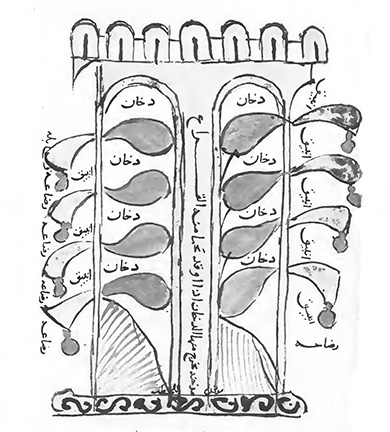
Yet the emergence of modern perfumery depended not only upon fragrant materials, but upon technological innovations in distillation. Between the ninth and eleventh centuries, Muslim scholars refined the use of the alembic still and steam distillation techniques that transformed the production of perfumes, floral waters, and medicinal extracts.2
Distillation and the Islamic Mediterranean
Among the figures associated with these developments was Ibn Sina, known in Latin Europe as Avicenna, whose writings on medicine and natural philosophy circulated widely beyond the Islamic world. Through Muslim-ruled Sicily under the Aghlabids and later the Kalbids, botanical knowledge, agricultural practices, and technical traditions entered the central Mediterranean.
Even after the Norman conquest of Sicily, many of these traditions endured. Rather than a clean rupture between Muslim and Christian rule, Sicily became a zone of transmission where Arabic, Greek, Latin, and Norman cultures continued to interact. This Mediterranean setting helped prepare the conditions in which Italian medicinal extraction, floral waters, and eventually perfume production developed in new institutional settings.3
Italy, Florence, and Perfumery
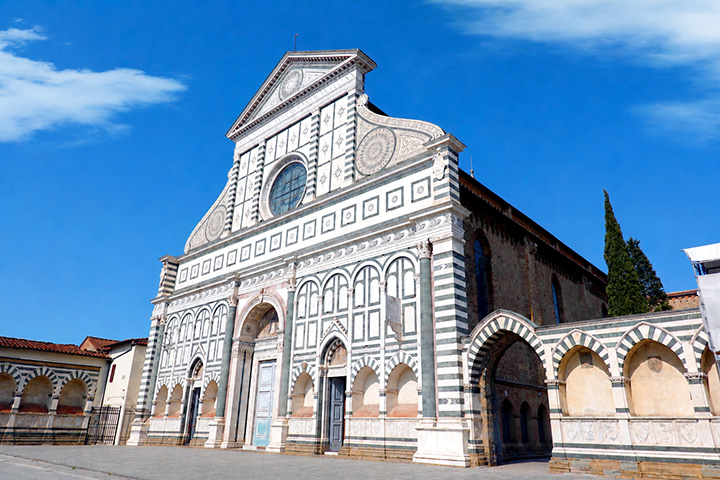
By the late medieval and early Renaissance periods, Italian monastic centers increasingly became associated with medicinal extraction and perfume production. One of the most famous examples emerged in Florence at Santa Maria Novella, where Dominican friars produced herbal remedies, floral waters, and perfumes.
The famous Acqua della Regina, or “Water of the Queen,” became associated with early alcohol-based perfume traditions that would later influence European perfumery more broadly. The façade of Santa Maria Novella also provides a visual reminder of the broader Mediterranean artistic currents shaped through centuries of interaction among Islamic, Norman Sicilian, and Italian architectural traditions.
Perfume Culture in America
From Italy, perfume production expanded into France, particularly in the city of Grasse, which emerged as one of Europe’s most important perfume centers. By the nineteenth century, American newspapers and commercial catalogs routinely advertised imported perfumes, extracts, floral waters, and scents associated with the East. Pharmacists often served as intermediaries in this trade, selling French perfumes and aromatic compounds alongside medicines, toiletries, and cosmetics.
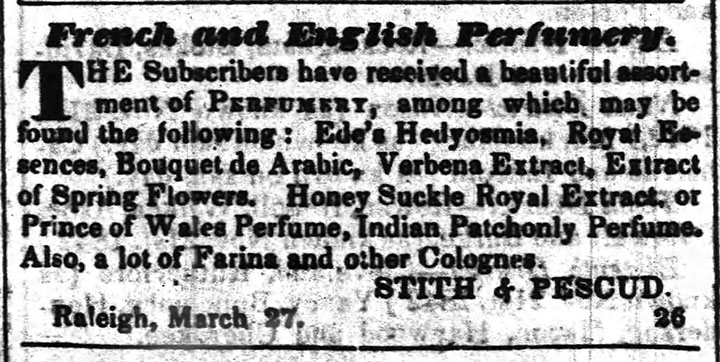
An 1844 advertisement placed by the North Carolina firm of Stith & Pescud listed “Bouquet de Arabic” and “Indian Patchouli Perfume” alongside French and English perfumery. The advertisement demonstrates that fragrances associated with the East and South Asia had already entered American commercial culture by the mid-nineteenth century.4
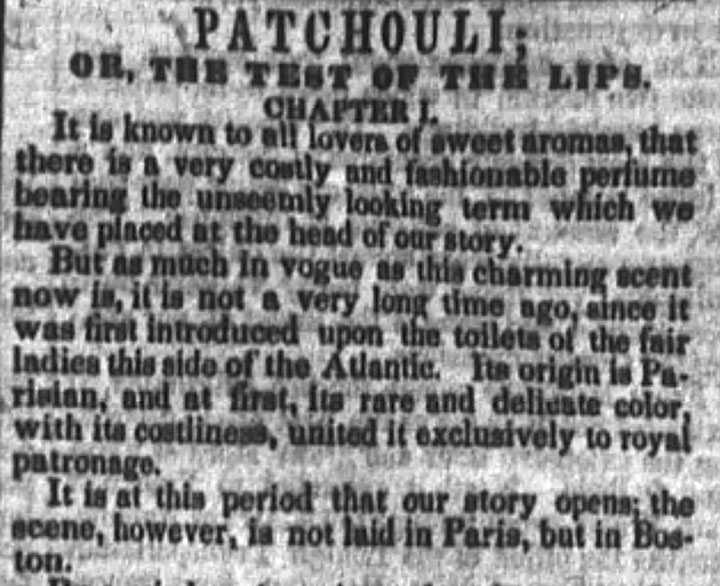
An 1850 issue of the Cincinnati Enquirer described patchouli as “known to all lovers of sweet aromas” and characterized it as a “very costly and fashionable perfume.” The notice was part of a much larger commercial environment in which American readers encountered musk, jasmine, rose, sandalwood, patchouli, and other fragrances through a vocabulary of luxury, medicine, fashion, and exotic geography.5
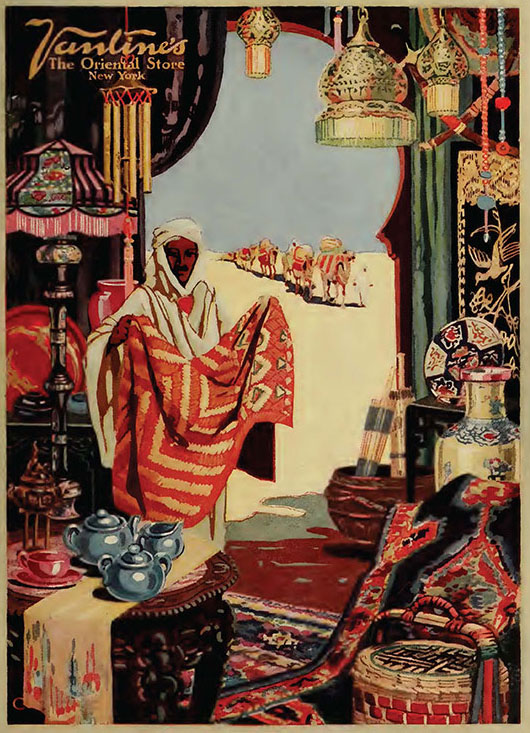
Decades later, the 1919 catalog of A. A. Vantine & Co. advertised “Oriental Extracts” including Kutch Sandalwood, Turkish Rose, and Delhi Heliotrope. The language of “Oriental” fragrance marketing reflected both the globalization of perfume commerce and the enduring association of floral oils, sandalwood, musk, rose, and patchouli with the East in the American imagination.6
Syed Rahman and Zabe Perfume
Within this broader historical setting emerged Muslim immigrant entrepreneurs such as Syed Rahman, founder of Zabe Perfume. Rahman arrived in North America during the early twentieth century, part of the small but growing wave of Muslim immigrants who settled in industrial cities across the United States and Canada.
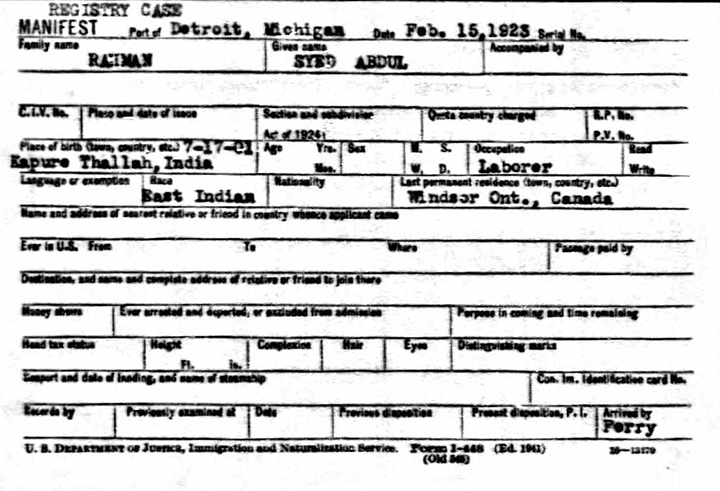
Passenger records indicate that he entered the United States through the Detroit-Windsor ferry crossing in 1923. Last permanent address Windsor Ont., Canada. Occupation Laborer7
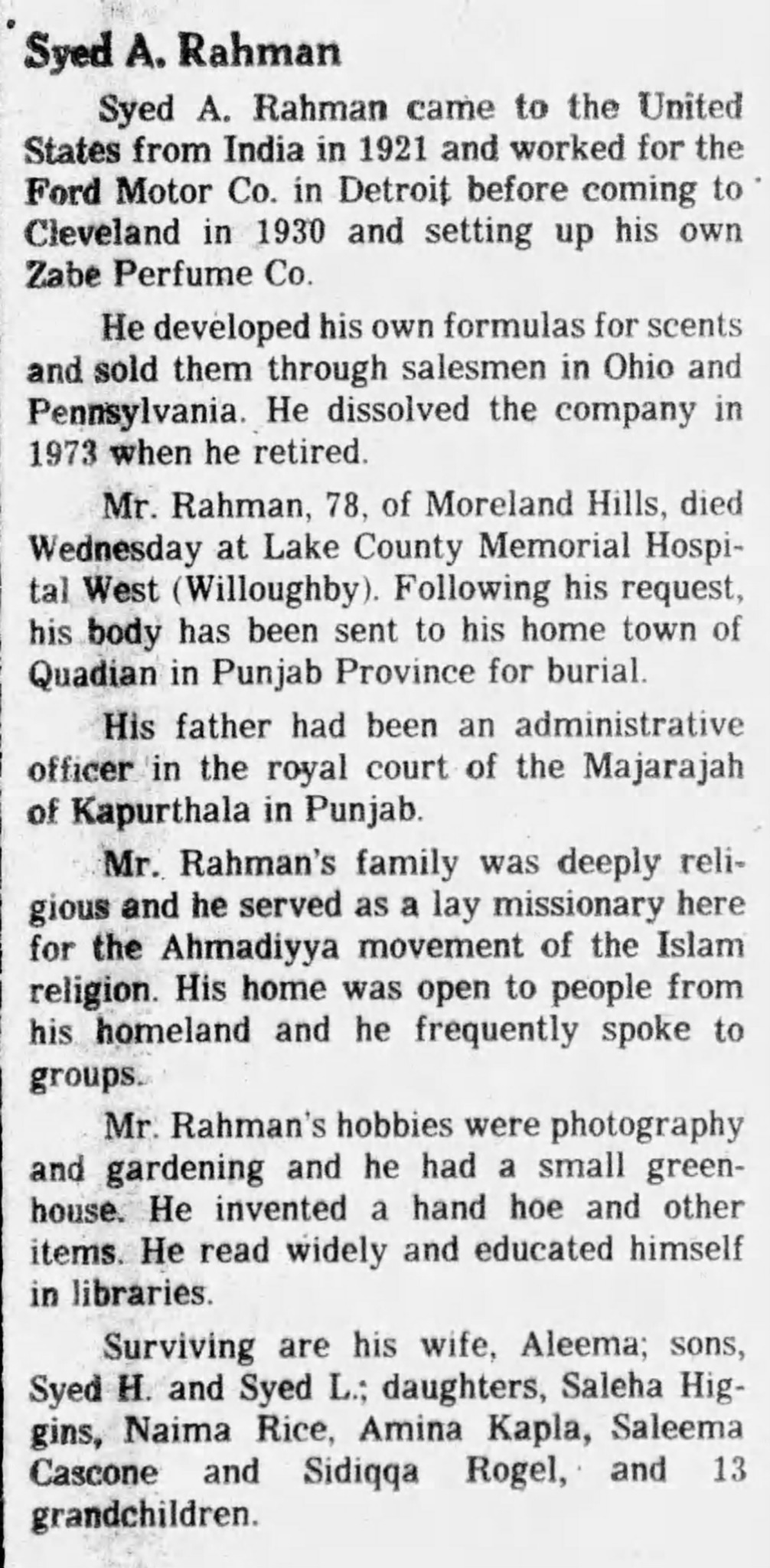
Later records, including his obituary, stated that he had originally come to work at the Ford Motor Company in 1921. The earlier date coincided with the establishment of the Highland Park Moslem Mosque in Detroit, an institution briefly associated with the Ahmadiyya missionary Mufti Muhammad Sadiq. Rahman’s obituary later described him as an Ahmadiyya lay missionary.
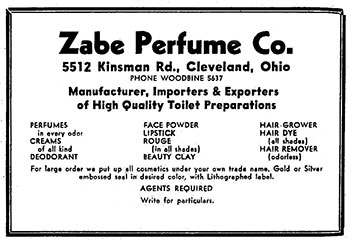
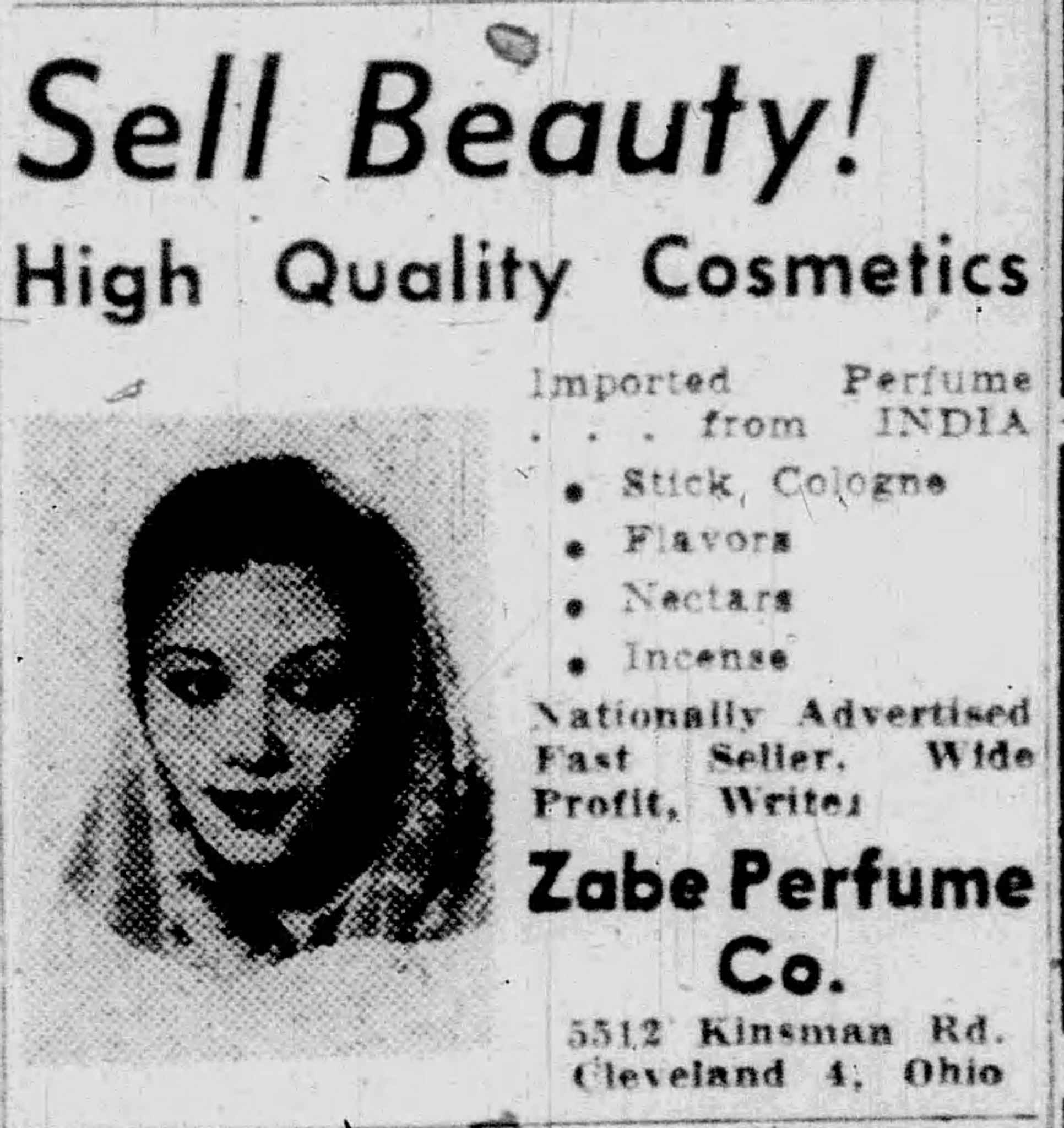
By 1938 he had relocated to Cleveland, where he advertised Zabe Perfume in The Moslem Sunrise, one of the earliest Muslim periodicals published in the United States. He subsequently placed advertisements in newspapers, building a perfume business that operated for decades.8
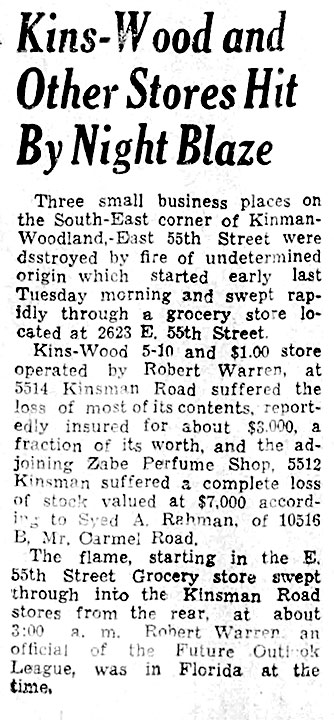
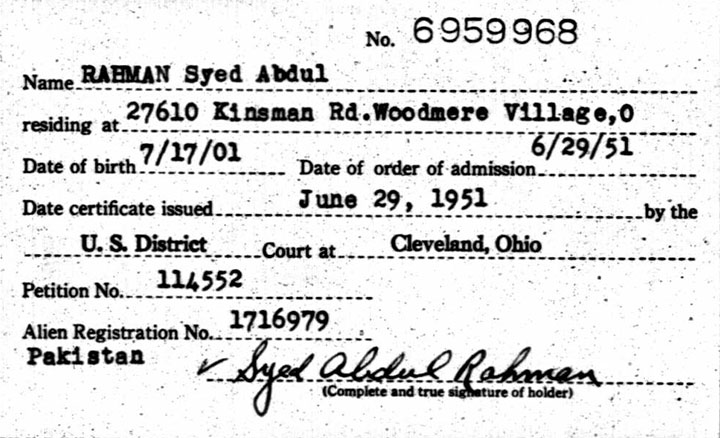
In 1945, a fire in an adjoining building spread into Rahman’s shop and destroyed his inventory, representing a major setback to the business. Nevertheless, he rebuilt and resumed operations. By 1951 Rahman had become a naturalized citizen and was listed in official records as Pakistani.
Two years later he resumed advertising activity, including multiple advertisements in 1953.
Rahman continued operating his business until his retirement in 1973. He died five years later. His obituary preserved the outlines of a life that crossed industrial labor, missionary activity, Muslim community formation, and perfume entrepreneurship in the American Midwest.11
Conclusion
The history of Zabe Perfume illustrates how Muslim immigrant life in North America intersected with much older currents of scientific exchange, commerce, and fragrance culture. The perfumes marketed by Syed Rahman belonged to a tradition shaped over centuries by Muslim perfumers, physicians, chemists, merchants, and devotional practices stretching from the medieval Islamic world to Sicily, Italy, France, and ultimately the United States.
Far from being disconnected episodes, these histories formed part of a continuous chain of transmission linking attar traditions and distillation science to modern immigrant entrepreneurship in twentieth-century America.
Footnotes
- Ahmad Y. al-Hassan and Donald R. Hill, Islamic Technology: An Illustrated History (Cambridge: Cambridge University Press, 1986), 143-144. ↩
- Donald R. Hill, Islamic Science and Engineering (Edinburgh: Edinburgh University Press, 1993), 153-157. ↩
- On Muslim Sicily and Mediterranean transmission, see Olivia Remie Constable, Housing the Stranger in the Mediterranean World (Cambridge: Cambridge University Press, 2003). ↩
- The Raleigh Register (Raleigh, North Carolina), April 26, 1844, 4, Newspapers.com. ↩
- Cincinnati Enquirer (Cincinnati, Ohio), July 18, 1850, 1, Newspapers.com. ↩
- A. A. Vantine & Co., Vantine’s Oriental Store catalog, 1919, Internet Archive. ↩
- Detroit-Windsor Ferry passenger manifest, 1923. The National Archives at Washington, D.C.; Card Manifests (Alphabetical) of Individuals Entering through the Port of Detroit, Michigan, 1906-1954; NAI 4527226; Records of the Immigration and Naturalization Service, 1787-2004. Accessed via Ancestry.com, Detroit, Michigan, U.S., Border Crossings and Passenger and Crew Lists, 1905-1963. ↩
- The Moslem Sunrise, May 1938, Vol. 10, No. 2, 36. ↩
- Call and Post (Cleveland, Ohio), January 6, 1945, p. 1, Newspapers.com. ↩
- United States Naturalization Record, Syed Rahman, 1951. National Archives and Records Administration (NARA), Washington, D.C., Index Cards to Naturalization Petitions for the U.S. District Court for the Northern District of Ohio, Eastern Division, Cleveland, 1855-1967, Microfilm Serial M1893, Roll 24. Accessed via Ancestry.com, U.S., Naturalization Records Indexes, 1794-1995; New Pittsburgh Courier (Pittsburgh, Pennsylvania), May 23, 1953, p. 17, Newspapers.com. ↩
- The Plain Dealer (Cleveland, Ohio), July 29, 1978, 65, Newspapers.com. ↩