
Founder · Independent Researcher · Collector · Media Producer
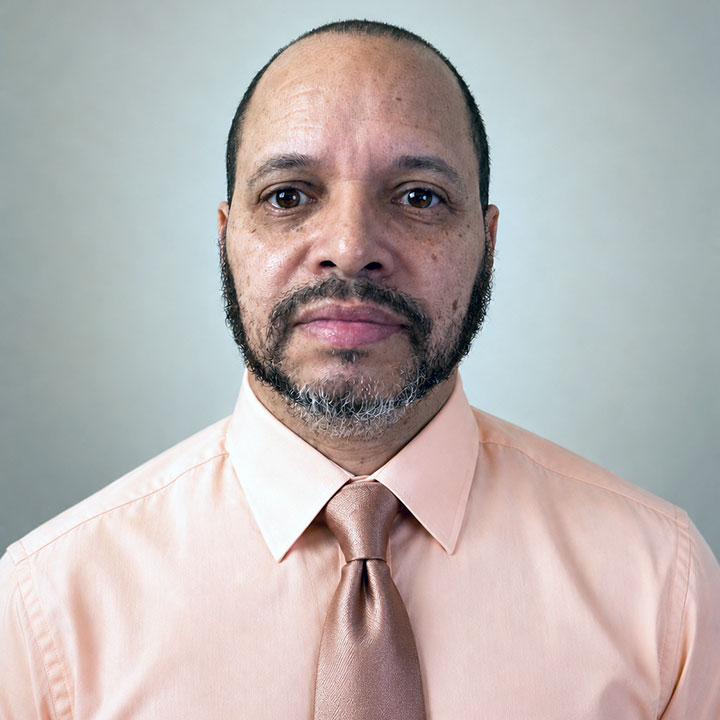
Philip Thorne is an independent researcher, collector, media producer, and founder of the Islamic Antiquarian Society of the Americas. IslamicASA grew out of his long pursuit of the scattered documentary record of Islam and Muslims in the Western Hemisphere.
For more than two decades, Thorne has collected and studied rare books, newspapers, photographs, manuscripts, ephemera, and archival traces connected to Muslim life in the Americas. What began as a private effort to preserve overlooked materials gradually became a larger institutional vision.
While researching African Muslim presence in the Caribbean, liberated Africans in Trinidad, early Muslim communities in North America, and the wider documentary history of Islam in the Americas, Thorne repeatedly encountered important sources that were difficult to access, poorly cataloged, or almost unknown outside specialist circles.
IslamicASA was founded to answer that gap: to recover, preserve, digitize, and interpret the historical record of Muslims in the Americas through printed works, manuscripts, newspapers, photographs, ephemera, oral histories, and archival collections.
The Society reflects Thorne’s conviction that the history of Islam in the Americas is not marginal, accidental, or recent, but deeply embedded in the documentary record of the Atlantic world, African diaspora history, Caribbean history, North American Muslim communities, and the intellectual life of Muslim peoples across the Western Hemisphere.
An avid genealogist, Thorne traced his paternal ancestry through traditional documentary research to the limits of the surviving eighteenth-century paper trail. More recently, genetic genealogy has enabled him to connect with DNA cousins in Senegambia and northern Nigeria whose families have practiced Islam for generations. His family history reflects the broader legacy of enslaved Muslims in the Americas. Family tradition and genetic connections further suggest a relationship to the lineage of the great nineteenth-century West African reformer, Usman dan Fodio. For Thorne, these discoveries brought his own journey full circle—from embracing Islam as a revert to learning that some of his ancestors had themselves been Muslims generations earlier.
Early Encounters
Looking back, Thorne now recognizes that his first encounters with Islam occurred years before his reversion. While attending high school at Germantown Academy in suburban Philadelphia, one of his closest friends was Ibn, whose family had emigrated from Egypt. Whenever he visited their home, he found himself captivated by the beautifully framed Arabic calligraphy that adorned the walls. At the time, he never thought to ask what the inscriptions meant. Years later, after embracing Islam, he realized they were verses from the Qur'an.
Although he could not have known it then, the experience remained with him. In retrospect, and especially after tracing his paternal ancestry and discovering deep ancestral ties to Muslim communities in West Africa, Thorne views those early encounters with Islam as unexpectedly meaningful—as if a forgotten part of his own history had quietly begun calling him home long before he understood its significance.
The Origin of “Farouq”
There is a memorable story behind how Thorne came to be known as “Farouq.”
In the early 1990s, while volunteering at a Muslim youth camp sponsored by the Islamic Center of Rochester, two visitors from Saudi Arabia stopped by the mosque to perform salah. At the time, the mosque’s imam was Dr. Muhammad Shafiq, who would later become widely known as a scholar, author, educator, and pioneer in interfaith dialogue. After the prayer, one of the Saudi visitors asked Thorne his name. When he replied, “Philip,” the visitor smiled and said, “I can’t call you Philip. I’ll call you Farouq.”
Somewhat taken aback, Thorne walked directly into Dr. Shafiq’s office and expressed his displeasure over having been given a different name. Dr. Shafiq simply asked, “Do you know what the name means?” When Thorne admitted that he did not, Dr. Shafiq explained its meaning and then added, “The name fits you.”
The Saudi visitor was equally convinced. Throughout his stay, he introduced Thorne to everyone as “Farouq,” and the name remained. Nearly four decades later, it is the name by which many friends, colleagues, and members of the Muslim community continue to know him.
Looking back, Thorne considers it a privilege to have spent those formative years in the company of scholars such as Dr. Muhammad Shafiq while he served as imam of the Islamic Center of Rochester. The encounter that began as an unexpected nickname became a lasting part of his identity within the Muslim community.
Professional Background
Thorne’s professional background spans film and television production, broadcasting, digital systems, web development, content strategy, intellectual property development, and AI-assisted creative workflows. He holds a Bachelor of Science degree in Film and Television Production from the Rochester Institute of Technology.
His experience across media production, digital publishing, archives, and emerging technology informs IslamicASA’s approach to public history: serious scholarship presented through accessible digital platforms.
Research Focus
- Islam and Muslims in the Americas
- African Muslim history in the Caribbean and Atlantic world
- Liberated Africans, Arabic and Ajami manuscripts, and Muslim naming patterns in colonial records
- The Free Mandingo Society of Trinidad and related archival reconstructions
- Printed works, newspapers, photographs, ephemera, and community archives
- Digital preservation and public access to Muslim historical materials
Through IslamicASA, Thorne seeks to bridge academic scholarship, community memory, independent collecting, and public access so that the documentary history of Muslims in the Western Hemisphere can be preserved, studied, and shared.