
Abstract
The Malê Slave Rebellion of 1835 stands as one of the most important episodes of organized slave resistance in the Atlantic world and the most extensively documented Muslim-led uprising in Brazilian history. Centered in Salvador, Bahia, the revolt involved African-born Muslims, both enslaved and free, whose participation reflects the persistence of Islamic learning, literacy, and communal organization under slavery. This study situates the rebellion within the broader structures of Brazilian slavery and West African Islamic education, while grounding its analysis in archival evidence, including Arabic manuscripts confiscated after the uprising. Among the most significant of these is a manuscript preserved in Le Havre and described as a book found in the pocket of an African man killed during the insurrection. Read alongside the Arabic documents studied by Rolf Reichert and the historical reconstruction of João José Reis, these materials demonstrate that the rebellion must be understood not only as a slave revolt, but also as an episode in the documentary history of Islam in the Americas.
Introduction
The Malê Slave Rebellion of 1835 stands among the most significant episodes of organized slave resistance in the Atlantic world and remains the most extensively documented Muslim-led uprising in Brazilian history. The revolt occurred in Salvador, capital of the province of Bahia, and involved primarily African-born Muslims, both enslaved and free. João José Reis identifies the term Malê as deriving from the Yoruba ìmálẹ̀ (imale), meaning “Muslim,” reflecting the religious identity of the participants rather than an ethnic designation. 1
Unlike many uprisings in the Americas, the Malê revolt is partially reconstructable through Arabic-language materials produced by the participants themselves and later confiscated by authorities. These documents provide rare primary evidence of Islamic literacy and intellectual continuity among enslaved Africans in Brazil. 2
Historical Context
By the early nineteenth century, Bahia contained one of the largest enslaved populations in the Atlantic world, with a substantial proportion of African-born individuals. Many originated from regions corresponding to present-day Nigeria and Benin, including Yoruba (Nagô), Hausa, and Nupe populations, among whom Islam had long been established. 3
A number of these individuals arrived in Brazil with prior exposure to Qur’anic education and Arabic literacy, enabling the preservation of religious knowledge under conditions of enslavement. 4 This presence complicates assumptions that enslaved populations in the Americas were uniformly deprived of formal intellectual or religious systems.
For a general assessment of slavery in Brazil, Gilberto Freyre’s The Masters and the Slaves remains a foundational, though much-debated, work in the historiography of Brazilian society. 5
Organization and Structure of the Revolt
The Malê uprising was premeditated and coordinated, with planning conducted in private residences across Salvador. Reis demonstrates that the revolt involved networks of communication among both enslaved and freed Africans, many of whom shared a common religious identity. 6
The uprising was scheduled to coincide with the conclusion of Ramadan in January 1835, suggesting a degree of shared temporal coordination among participants. 7
Although the precise political objectives remain debated, the revolt clearly aimed at the overthrow of local slave authority, the liberation of enslaved Africans, and the disruption of the existing colonial order. 8
The Events of January 24–25, 1835
The revolt began in the early hours of January 25, though elements of the plan had been compromised in advance, allowing provincial authorities to prepare defensive measures. 9
Participants mobilized in central Salvador, including the district of Pelourinho, attempting to seize weapons and expand the uprising through coordinated movement. Armed primarily with bladed weapons, they engaged local militias and government forces.
The confrontation was brief. Provincial forces, supported by armed civilians, suppressed the revolt within hours. 10
Documentary Evidence: Arabic Manuscripts
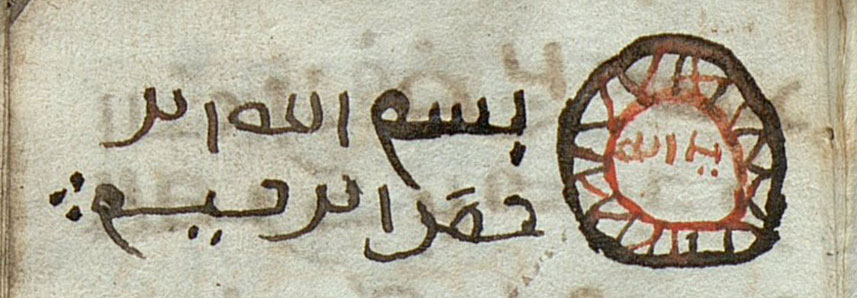
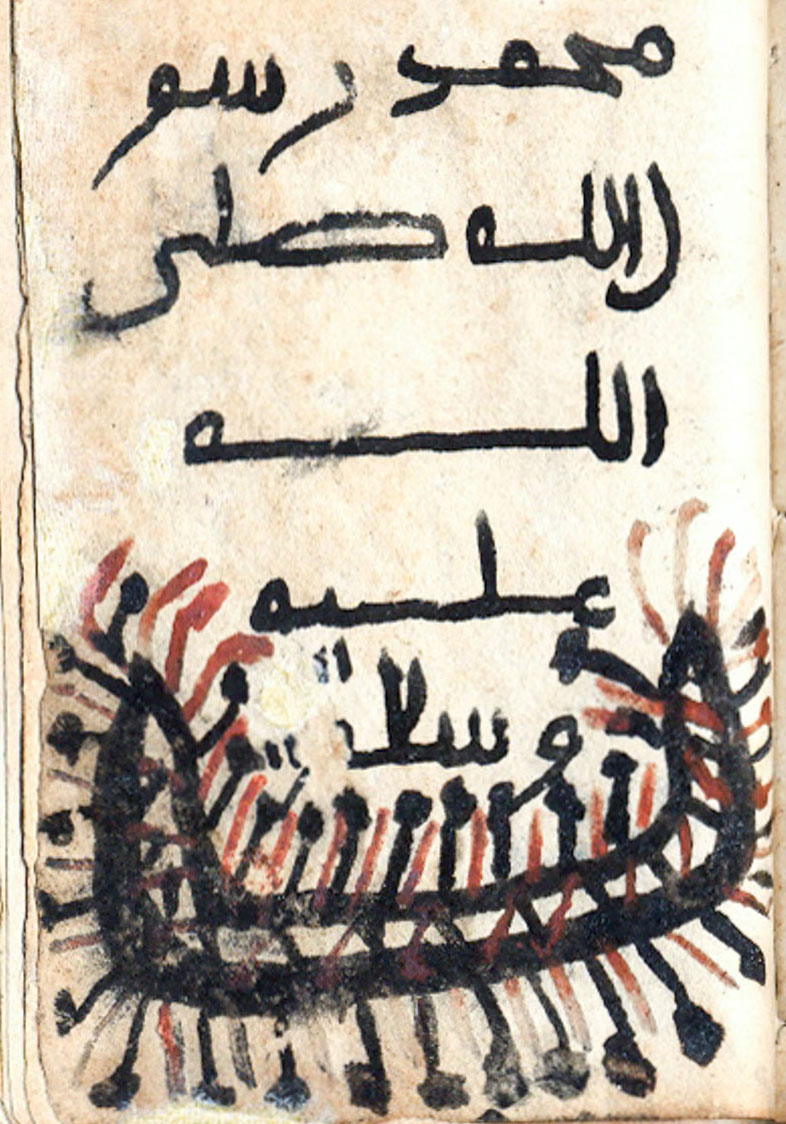
The evidentiary significance of the Malê revolt lies in the Arabic-language materials confiscated after its suppression. Among these is a manuscript preserved in the Bibliothèque municipale du Havre (MS 556), described in its archival label as a “book found in the pocket of an African Black man killed during the insurrection that broke out on the night of 25 January 1835.” 11
Analysis of the Arabic documents preserved in Bahia demonstrates that these materials consist primarily of Qur’anic passages, prayers, and devotional texts, rather than administrative or military instructions. 12 These findings confirm the presence of literate Muslim Africans in Bahia, capable of producing and preserving written religious texts under conditions of enslavement.
West African Islamic Education and Continuity
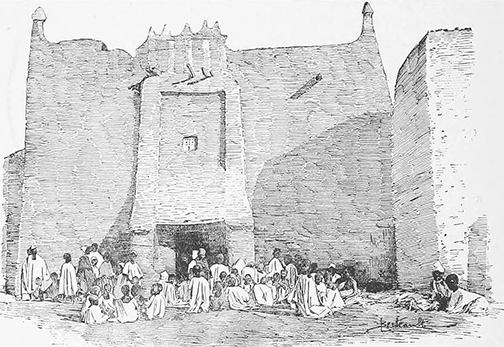
The presence of Arabic manuscripts among the Malê participants must be understood within the broader context of Islamic education in West Africa. In regions such as Yorubaland and Hausaland, systems of Qur’anic instruction produced individuals trained in recitation, memorization, and, in some cases, writing in Arabic. 13
As Rudolph T. Ware III has shown, Islamic education in West Africa functioned as an embodied system of knowledge transmission, in which the Qur’an was internalized through disciplined practice. 14 This framework helps explain how enslaved Muslims in Bahia could retain elements of literacy and religious learning after displacement across the Atlantic.
Aftermath and Repression
The suppression of the revolt was followed by systematic repression, including executions, imprisonment, and deportation of African-born participants. Authorities increased surveillance of African religious practices, particularly those associated with Muslim communities. 15
These measures reflect the extent to which colonial authorities recognized the organizational capacity associated with literacy and shared religious identity among the Malê participants.
Conclusion
The Malê Slave Rebellion of 1835 represents a documented case of African Muslim agency expressed through literacy, organization, and revolt. Although militarily unsuccessful, it provides rare insight into the internal structures of enslaved Muslim communities in the Atlantic world.
Through the combined evidence of archival manuscripts, contemporary records, and modern scholarship, the revolt stands as a critical case for understanding the persistence of Islamic intellectual traditions in the Americas.
Methodological Note
This article is based on modern scholarship together with direct reference to a digitized primary manuscript associated with the revolt. Claims concerning the structure of the uprising rely chiefly on João José Reis; claims concerning the Arabic textual materials rely on Rolf Reichert and the archival manuscript preserved as Bibliothèque municipale du Havre, MS 556. Broader claims concerning Islamic education in West Africa are used only as contextual background and are not presented as direct evidence for events in Bahia.
Footnotes
- João José Reis, Slave Rebellion in Brazil: The Muslim Uprising of 1835 in Bahia, trans. Arthur Brakel (Baltimore: Johns Hopkins University Press, 1995), 3–5. ↩
- Reis, Slave Rebellion in Brazil, 119–146. ↩
- Reis, Slave Rebellion in Brazil, 29–58. ↩
- Sylviane A. Diouf, Servants of Allah: African Muslims Enslaved in the Americas (New York: New York University Press, 1998), 153–169. ↩
- Gilberto Freyre, The Masters and the Slaves (Casa-Grande & Senzala): A Study in the Development of Brazilian Civilization, trans. Samuel Putnam (New York: Alfred A. Knopf, 1946). ↩
- Reis, Slave Rebellion in Brazil, 60–85. ↩
- Reis, Slave Rebellion in Brazil, 60–75. ↩
- R. K. Kent, “African Revolt in Bahia: 24–25 January 1835,” Journal of Social History 3, no. 4 (1970): 334–356. ↩
- Reis, Slave Rebellion in Brazil, 102–110. ↩
- Reis, Slave Rebellion in Brazil, 110–140. ↩
- Livre trouvé dans la poche d’un noir africain mort lors de l’insurrection qui éclata dans la nuit du 25 janvier 1835 à Bahia, Bibliothèque municipale du Havre, MS 556, digitized in Internet Archive, archive.org; translation mine. ↩
- Rolf Reichert, Os documentos árabes do Arquivo do Estado da Bahia (Salvador: Universidade Federal da Bahia, Centro de Estudos Afro-Orientais, 1970). ↩
- Reis, Slave Rebellion in Brazil, 29–58. ↩
- Rudolph T. Ware III, The Walking Qur’an: Islamic Education, Embodied Knowledge, and History in West Africa (Chapel Hill: University of North Carolina Press, 2014). ↩
- Reis, Slave Rebellion in Brazil, 200–230. ↩